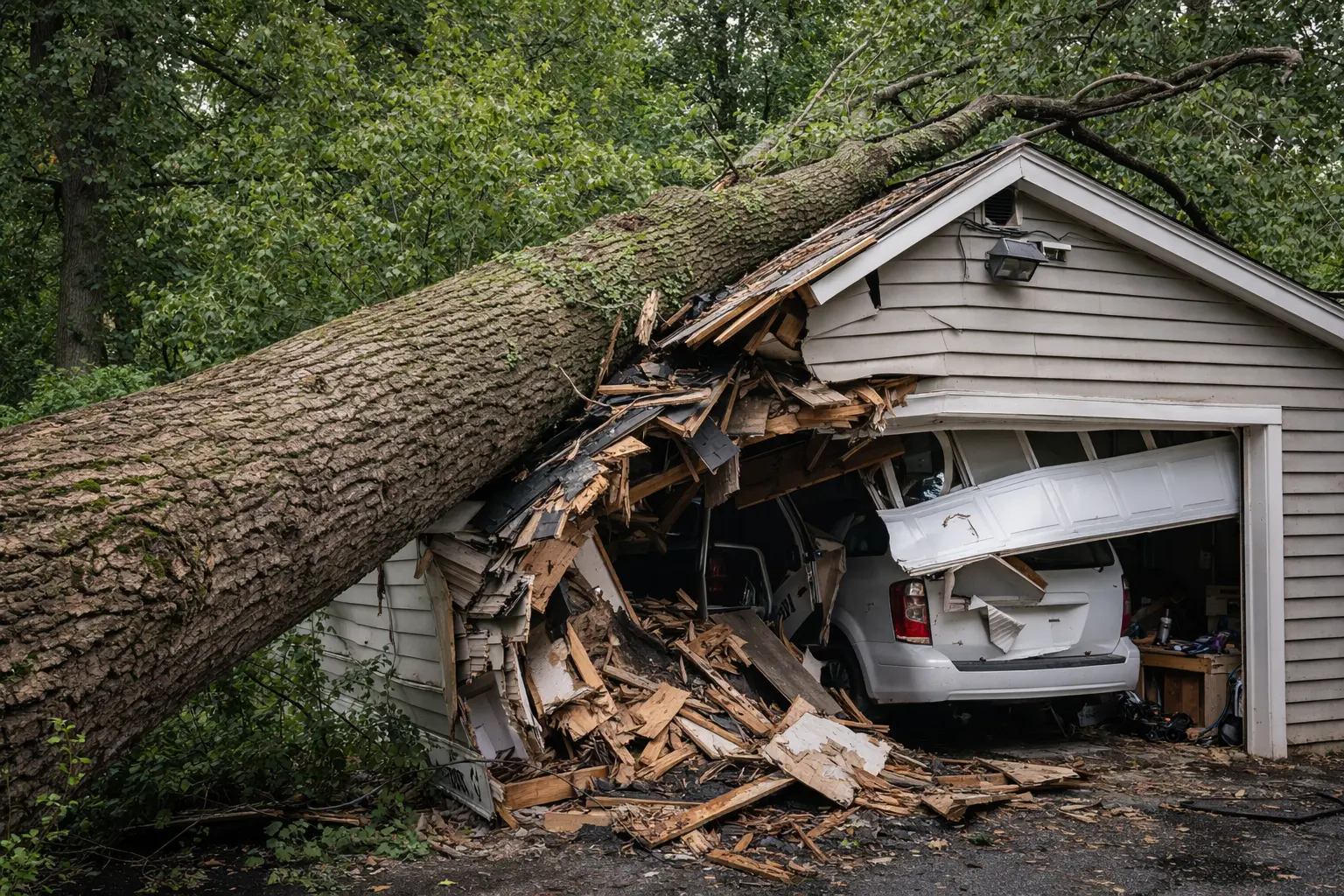
Garages take hits from fallen trees more often than people realize. They sit close to the big old trees at the back of the property, they’re not always in sight during a storm, and their roofs are built lighter than the main house. By the time you discover what happened, the tree may have been sitting there all night.
Why Garage Roofs Take More Damage
A standard garage roof isn’t built to handle the weight of a mature tree. The framing is lighter, the pitch is lower, and there’s less reinforcement than you’d find on the house itself. A tree that might dent a residential roofline can do serious structural damage to a garage.
If your garage is attached to the house, that’s worth paying attention to. Damage to the shared wall or roof line can be harder to spot and easier to miss until repairs are underway.
Don’t Walk In Until You Know What You’re Walking Into
Before you open the door or step inside, look at the roof from the outside. If it’s sagging, if a large section of tree is pressing down on it, or if the walls look like they’ve shifted at all, don’t go in. A damaged roof under that kind of load can drop without much warning.
If you can see through a window first, do that. You want to know what condition the interior is in before you open a door that might have roof material piled up against it.
Get Photos Before Anything Is Moved
Same as any tree-on-structure situation: document everything before the tree gets touched. Roof damage, wall condition, the tree’s position and point of origin, anything inside that got hit. Vehicles and equipment stored in the garage should be documented separately.
Call your insurance company before authorizing removal. Coverage for outbuilding damage depends on your specific policy and requires your insurer’s approval. Don’t skip that call.
The Tree Needs to Come Off in Sections
Pulling or cutting a tree off a garage roof without thinking through the angles can make things worse. The weight is distributed in a specific way, and if you disrupt it in the wrong order, sections of roof come down with the tree.
A crew that knows structural removals will assess how the tree is resting and work in sections, managing the load the whole way through. Tree On Me LLC focuses specifically on this kind of work throughout Montgomery County. If you want to see how a garage removal actually gets approached, their guide on removing a tree from a garage walks through the details.
Get the Structure Checked Before You Start Repairs
Once the tree is out, don’t skip straight to patching the roof. Have a contractor assess the structure first. Depending on what they find, temporary shoring might be needed before any repair work can start safely.
If the garage is attached, a general contractor should be part of that conversation, not just a roofer. The shared wall and the connection to the main house need to be looked at too.
Don’t Forget What Was Inside
Cars, tools, gear, anything stored in the garage that was damaged deserves its own documentation. Put together a list with photos and a rough sense of replacement value. Your insurer will need that information handled separately from the structural damage.
Take a Walk Around the Rest of the Yard
If the tree that came down was yours, this is a good time to look at what’s left standing. Was this one showing problems before it fell? Soft spots at the base, a lean you’d ignored, dead sections in the canopy? Other trees in similar condition nearby are worth having someone take a look at.
Getting through a tree-on-garage situation takes some organization, but it’s doable. Start with safety, document everything, let the pros handle the removal, and get a real assessment before repairs begin.